Texas Redistricting and the 2026 Primaries: What Changed and Why It Matters for Houston
A new report by the Barbara Jordan Public Policy Research and Survey Center at Texas Southern University analyzes the demographic and partisan composition of the 38 U.S. House districts created by the mid-decade Texas redistricting process this past summer, with a special focus on the 10 Houston area congressional districts.
The report underscores the dramatic change in the boundaries and composition of several Houston area congressional districts. For example, only 3% of the residents of the new 9th Congressional District currently live in TX-9, only 26% of the residents of the new 18th Congressional District currently live in TX-18, and only 37% of the residents of the new 29th Congressional District currently live in TX-29. In the new versions of TX-9, TX-18 and TX-29 the largest share of the residents currently live in another district, with 44% of the new TX-9 residents presently living in TX-29 (and 41% living in TX-36), with 64% of the new TX-18 residents presently living in TX-9, and with 58% of the new TX-29 residents presently living in TX-18. TX-9 is represented by Congressman Al Green (who is running for re-election in TX-18), TX-18 will be represented for the remainder of 2026 by the winner of the January 31 special election between Amanda Edwards and Christian Menefee, and TX-29 is represented by Congresswoman Sylvia Garcia who is running for re-election in TX-29.
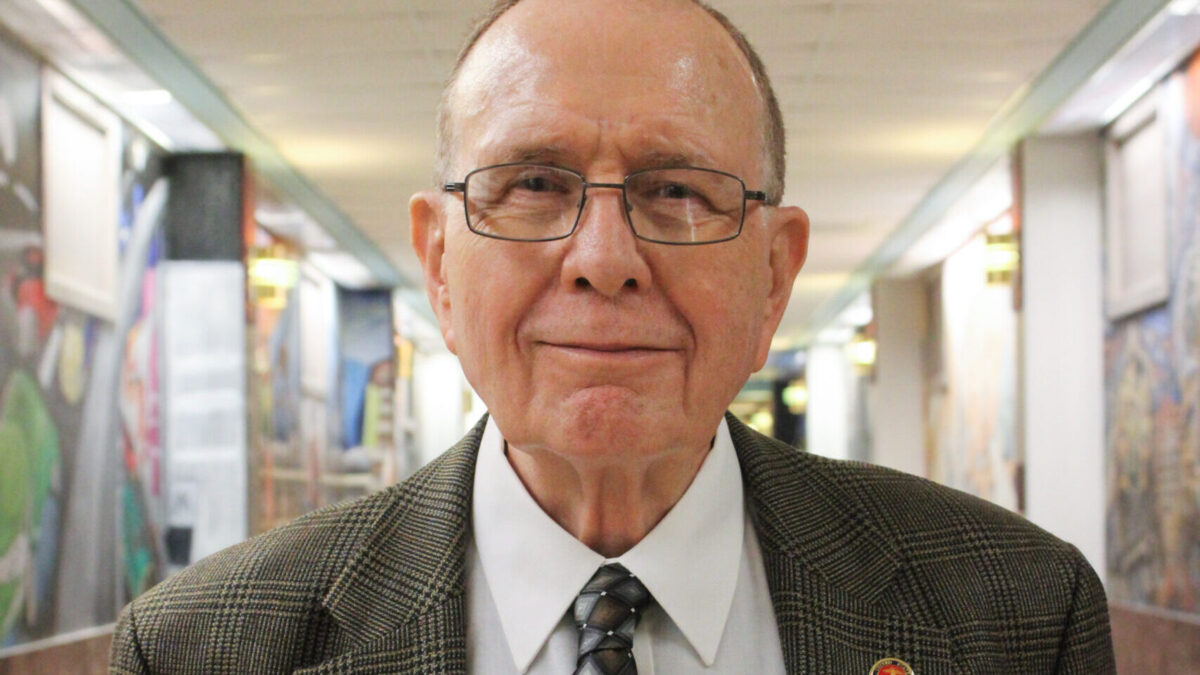
Nine of the 10 Houston area congressional districts have a Republican or Democratic partisan advantage of greater than 20%, meaning that barring a black swan event, the de facto winner in nine of the 10 Houston area U.S. House districts will be determined in the spring primaries rather than in the fall general election. In November 2026, the Republican candidate will be a virtual lock to win in the 2nd, 8th, 14th, 22nd, 36th and 38th Congressional Districts while the Democratic candidate will be a virtual lock to win in the 7th, 18th and 29th Congressional Districts. Dr. Michael O. Adams, the founding director of the Barbara Jordan Public Policy Research and Survey Center at Texas Southern University noted that among Houston’s 10 congressional districts, “only in the 9th is there the potential for a competitive race in November, although at least for now the Republican candidate will be a strong favorite to win and the Democrat the underdog.”
Hispanic Texans constitute an absolute majority of the overall population locally in TX-9 (62%) and TX-29 (59%), but account for only 50% (TX-9) and 43% (TX-29) of the Citizen Voting Age Population (CVAP), 45% (TX-9) and 38% (TX-29) of the registered voters, and 37% (TX-9) and 33% (TX-29) of those Texans who cast a ballot in the November 2024 presidential election. Furthermore, in 2022 and 2024 Hispanic Texans accounted for only two-fifths of Democratic primary voters and one-fifth of the Republican primary voters in TX-9 and for only one-fourth of the Democratic primary voters in TX-29.
Dr. Adams highlighted that “in spite of the winner of a majority of the primaries in Texas being virtually assured of victory in November, fewer than one in five Texas registered voters cast a ballot in the 2022 and 2024 primaries.” Dr. Adams further highlighted the case of TX-9, where “in 2022 and 2024 only an average of 4% of registered voters cast a ballot in the Democratic primary and 9% in the Republican primary.”
Among Other Findings:
- Black Texans constitute half (51%) of the CVAP in the new TX-18, and in 2022 and 2024 represented approximately two-thirds of the voters in the Democratic primary.
- Hispanic Texans constitute two-fifths (43%) of the CVAP in the new TX-29, but in 2022 and 2024 represented only a fourth of the Democratic primary voters, while Black Texans account for one-third (33%) of the CVAP in TX-29, but in 2022 and 2024 represented two-fifths of the Democratic primary voters.
- Hispanic Texans constitute half (50%) of the CVAP in the new TX-9, and in 2022 and 2024 represented two-fifths of the Democratic primary voters, while White Texans account for one-third (35%) of the CVAP and represented two-fifths of the Democratic primary voters in 2022 and 2024.
- The baseline Republican vote advantage in the Houston area’s six new dark red districts ranges from a high of 27% (TX-2) to a low of 23% (TX-36).
- The baseline Democratic advantage in the Houston area’s three new dark blue districts ranges from a high of 61% (TX-18) to a low of 25% (TX-7).
- In Houston’s one potentially competitive new district (TX-9), the baseline Republican advantage is 11%, with Donald Trump (R) having won the district by 20% in 2024, but with Beto O’Rourke (D) having won the district by 1% in the 2018 U.S. Senate election.
A copy of the report can be obtained via this link.
What's your reaction?
You may also like